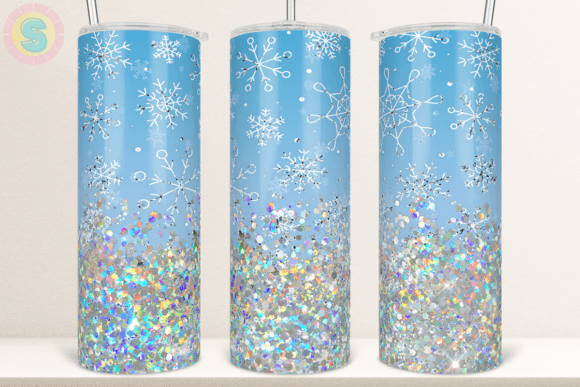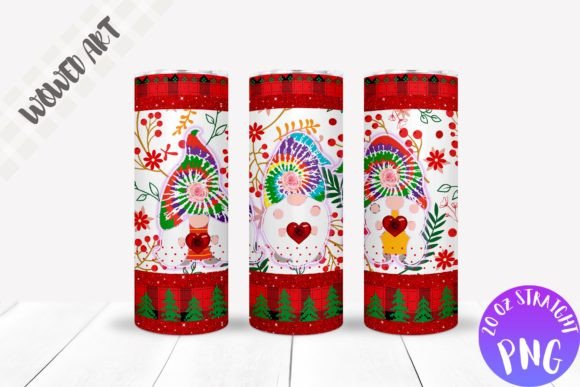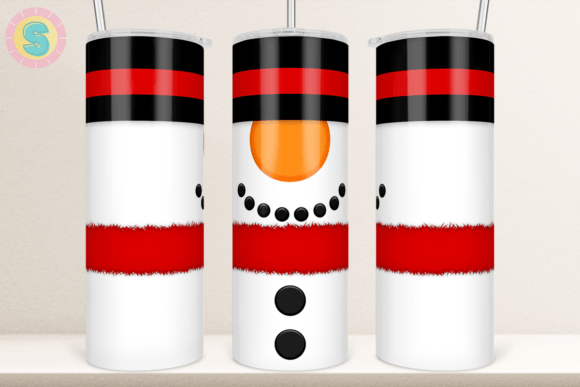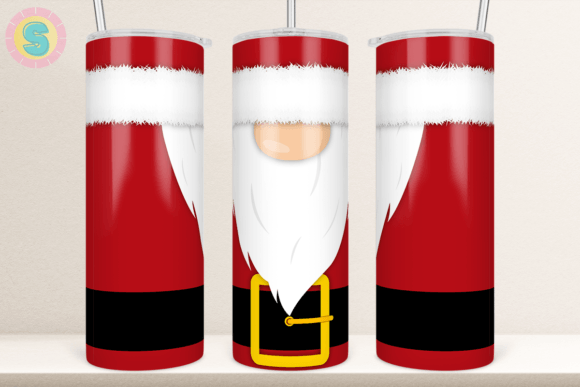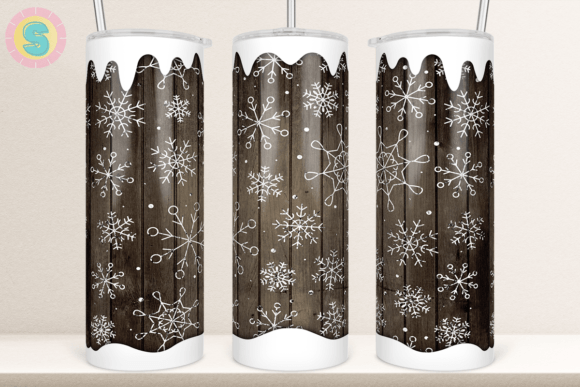
Snowflakes Christmas 20Oz Tumbler Wrap
As a designer who’s stitched hundreds of holiday pieces—from baby onesies to boutique aprons—I opened Snowflakes Christmas 20Oz Tumbler Wrap expecting festive charm. What I found was something quieter, more intentional: a crisp, wintry motif built for clarity, not clutter. It’s not just a snowflake—it’s a thoughtful composition that reads well at multiple scales and holds up under thread.
First Impressions: Clean, Calm, and Craft-Ready
The design feels like a breath of cold air—minimalist but not sterile. The snowflakes are varied in shape but unified in line weight and spacing. There’s no heavy ornamentation or tangled swirls, which is a relief when you’re planning embroidery. No tiny interior loops, no overlapping filigree that’ll vanish under satin stitch. Just open, airy forms with gentle symmetry—ideal for a machine embroidery design meant to translate cleanly onto fabric.
I immediately pictured it on a natural linen tea towel for a local craft fair. Not as a dense centerpiece, but as a subtle border along the hem—three repeating snowflakes, spaced just right. That’s where Snowflakes Christmas 20Oz Tumbler Wrap shines: as a quiet signature, not a shout.
Where It Truly Belongs (and Where It Doesn’t)
This isn’t a design for busy sweatshirts or high-contrast tote bags with bold typography. It’s better suited to products where subtlety adds value: embroidered baby blankets, rustic kitchen towels, minimalist aprons, or even delicate pillow covers for a winter nursery. As an applique design, its clean edges would hold beautifully in raw-edge or fused appliqué—especially on medium-weight cotton or twill.
It also works surprisingly well on curved surfaces—if scaled appropriately. I tested a resized version on a mockup of a structured cap brim and found the outer snowflakes read clearly without distortion. But caution applies: avoid using the full wrap layout on small hoop sizes (hoop size under 4x4 inches) without editing. The original PNG includes generous negative space—great for sublimation, less ideal for tight embroidery frames.
On textured fabrics like terry cloth or bouclé, simplify further. A single central snowflake—cleaned up and slightly enlarged—performs better than the full wrap. On dark fabric? Absolutely use it—but confirm your thread colors have enough contrast. White or silver metallics pop; pale blues or greys can disappear unless you add a light underlay or switch to a fill stitch with higher density.
Real-Life Test: A Holiday Gift That Feels Handmade, Not Mass-Produced
Last week, I used a modified version of Snowflakes Christmas 20Oz Tumbler Wrap on a set of organic cotton dish towels for a client’s holiday gift shop. We reduced the layout to three evenly spaced snowflakes, adjusted stitch density to prevent puckering on the lightweight fabric, and paired it with a simple running stitch outline for definition. Customers didn’t just buy the towels—they paused, touched the stitching, and asked, “Did you do this by hand?” That’s the quiet power of a well-chosen digital embroidery file: it elevates the handmade product without shouting.
That same sensitivity makes it strong for personalized gifts. Add a monogram beside one snowflake—or nestle it into the corner of a custom embroidered patch—and it feels curated, not templated. For Etsy sellers and small shop products, that distinction builds trust and repeat orders.
What to Watch For Before You Stitch
- Test on scrap fabric first—especially if using stretchy or thin fabric. Snowflakes with fine arms can distort without proper stabilizer.
- Review stitch density. Too dense, and the design stiffens; too sparse, and the snowflakes lose definition. Adjust based on your fabric texture and end use (e.g., baby embroidery needs softer, looser fills).
- Inspect small details in black-and-white mockups. Some snowflake points may blur on dark backgrounds unless thread contrast is deliberate.
- Confirm licensing before selling finished items or bundling the digital embroidery file with other design assets. This is a Graphics product—not a pre-digitized embroidery file—so digitizing for machine use is your responsibility.
- Use proper stabilizer for each project type: cutaway for knits, tear-away for stable wovens, and fusible + tear-away for lightweight linens.
Why It Builds Brand Consistency—Not Just Holiday Buzz
Unlike overused holly motifs or cartoonish Santas, Snowflakes Christmas 20Oz Tumbler Wrap fits seamlessly into year-round branding. Pair it with neutral palettes, natural fibers, and understated packaging—and it becomes part of your shop’s visual language, not just seasonal noise. That matters for craft business owners building long-term recognition.
For commercial embroidery clients, it offers flexibility: scale it down for a subtle cuff detail on a wool sweater, or enlarge it for a focal point on a canvas market bag. Its rustic wood-inspired aesthetic bridges modern minimalism and cozy tradition—making it equally at home in a Scandinavian boutique or a farmhouse-style Etsy store.
A Final Note for Designers and Makers
This isn’t a “plug-and-play” embroidery file. It’s a Crafts asset with intention behind its simplicity. Its strength lies in what it leaves out: no gradients, no micro-details, no forced complexity. That restraint gives you room—to adapt, refine, and embed it meaningfully into real projects.
If you’re choosing between flashy holiday graphics and something that feels quietly special, go with Snowflakes Christmas 20Oz Tumbler Wrap. Then treat it like a sketch—not a final answer. Resize it. Simplify it. Combine it with a single initial or a short phrase. Let it breathe on fabric. And above all: test, adjust, and trust your eye. Because the best embroidery project isn’t the one that looks perfect on screen—it’s the one that feels right in someone’s hands.