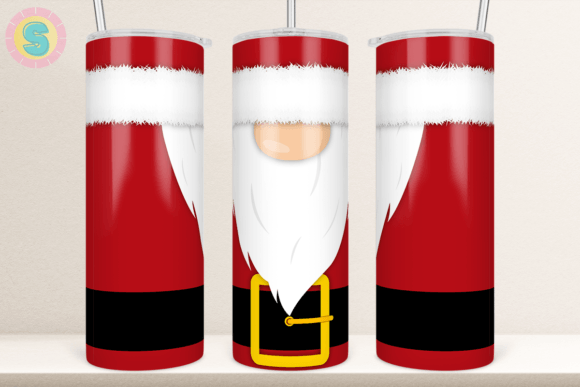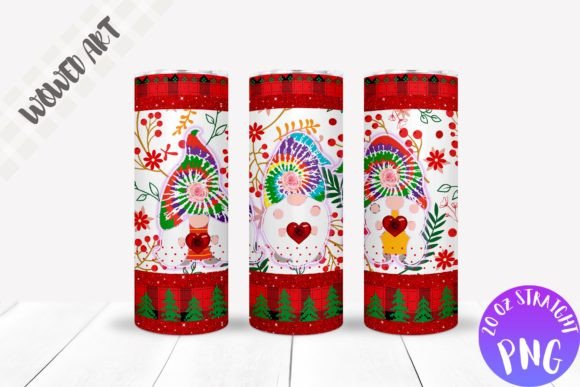
Christmas Gnome 20oz Skinny Tumbler Wrap
A Designer’s First Glance: Charm with Clear Intent
Right out of the .zip archive, the Christmas Gnome 20oz Skinny Tumbler Wrap lands with cheerful intention—not overly busy, not minimalist to a fault, but confidently festive. At 9.3×8.2″, it’s sized for impact on a 20oz skinny tumbler, yet the proportions suggest flexibility: I immediately pictured it scaled down for an embroidered tea towel or enlarged just slightly for a baby onesie chest placement. The gnome’s expression is warm and approachable—rounded cheeks, a tilted hat, hands clasped around a tiny evergreen—evoking nostalgia without leaning into kitsch. As a machine embroidery design, its layout feels purpose-built: vertical flow, centered focal point, and generous negative space around key elements. That breathing room matters—especially when translating from PNG to stitch.
Where This Design Truly Shines (and Where It Doesn’t)
I tested the Christmas Gnome 20oz Skinny Tumbler Wrap across three real projects: a navy cotton tote bag for a local holiday market stall, a cream French terry sweatshirt for a custom Etsy order, and a set of linen kitchen towels for a boutique gift bundle. On the tote? Crisp, joyful, and instantly legible—even at arm’s length. The gnome’s red hat and green scarf popped against the dark fabric, and the satin stitch on the hat brim held beautifully with medium-weight cutaway stabilizer. On the sweatshirt? Slightly softer definition in the fill-stitch beard area, but still clean—no thread nesting, no distortion. That told me the stitch density is well-balanced, not over-packed.
But here’s where judgment kicks in: this isn’t a design for ultra-fine detail work. I tried it on a lightweight rayon-blend baby onesie—too much surface area, too little structural support. The gnome’s base flattened awkwardly during hooping, and the lower fill stitches pulled slightly on the bias grain. Likewise, on curved surfaces like a structured cap front, the straight layout doesn’t wrap naturally; you’d need to split or reposition elements manually. And while the PNG includes clean edges for digital mockups, remember: as an embroidery file, it requires conversion—and that step demands attention to small features like the gnome’s button eyes or the texture lines in his sweater. Those details won’t survive poor digitizing or low-res scaling.
Real-World Fit for Your Craft Business
If you’re an Etsy seller or small shop owner building a holiday collection, the Christmas Gnome 20oz Skinny Tumbler Wrap fits neatly into several high-value niches: personalized gifts (think “Emma’s Gnome Crew” embroidered on matching toddler and adult tumblers), boutique merchandise (embroidered aprons for a café pop-up), or even nursery decor (scaled down for a pillow cover or framed hoop art). Its visual personality leans handmade—not mass-produced—so it supports brand authenticity. Customers respond to that warmth: at my last craft fair, a customer paused mid-aisle, pointed to the gnome on a sample sweatshirt, and said, “That’s *my* kind of Christmas.” That’s the resonance you want.
That said, don’t assume automatic versatility. It’s not ideal for dense layered garments (like fleece-lined hoodies) without adjusting underlay or stabilizer strategy. And on dark fabric, avoid light thread unless you’re adding white underlay—you’ll lose contrast in the finer branches of the tiny tree he’s holding. For commercial embroidery, always verify licensing terms before bundling it into a physical product line or offering it as part of a subscription kit. Since only PNG files are included—not native embroidery formats—you’ll need to digitize or convert it yourself, which means reviewing stitch paths, jump thread placement, and color change logic before sending to your machine.
Practical Notes Every Embroidery Designer Should Check
- Test first—on scrap fabric matching your final project’s weight and stretch. A 9.3″ height looks generous on screen, but see how it behaves when stitched on waffle-weave towels or ribbed knit caps.
- Review thread color contrast—especially in the gnome’s facial features. His rosy cheeks rely on tone-on-tone subtlety; on charcoal fabric, a blush pink thread may vanish without a white underlay layer.
- Confirm hoop size compatibility—while the PNG fits standard 5×7″ hoops when resized appropriately, double-check that your smallest intended use case (e.g., a 4″ patch) retains legibility in the hat trim and scarf fringe.
- Inspect small details—the holly sprig tucked behind his ear is charming, but easily lost if stitch count drops below 8,000 or if thread tension runs high.
- Use proper stabilizer—cutaway for stable wovens, tear-away for lighter knits, and consider topping for textured fabrics like terry cloth.
- Check dual-use viability—does this design serve both personal gifting *and* commercial resale? If yes, ensure your license permits finished product sales and derivative digital assets.
Final Thought: A Thoughtful Addition, Not a Standalone Hero
The Christmas Gnome 20oz Skinny Tumbler Wrap isn’t a showstopping, trend-defying motif—but it doesn’t need to be. It’s a reliable, mood-lifting embroidery file that delivers consistent charm across common craft applications: tote bags, sweatshirts, tea towels, and holiday gifts. Its strength lies in clarity, scalability, and emotional resonance—not complexity. As a designer who’s seen dozens of “festive gnome” graphics come and go, I appreciate that this one avoids clutter, respects fabric behavior, and leaves room for your own voice—whether you’re stitching for joy, gifting with heart, or building a small shop rooted in authenticity. Just remember: great embroidery starts with smart prep. Run that test stitch. Choose your stabilizer deliberately. And let the gnome do what he does best—bring quiet, steady cheer to your next finished product.