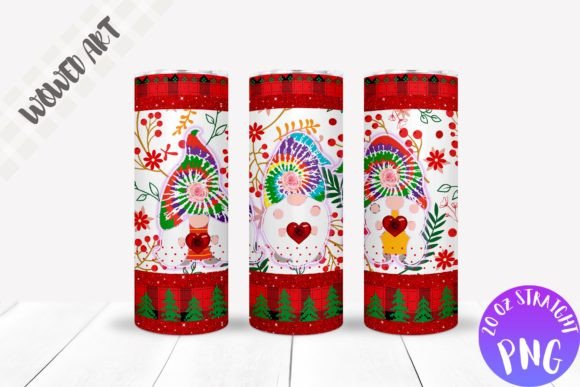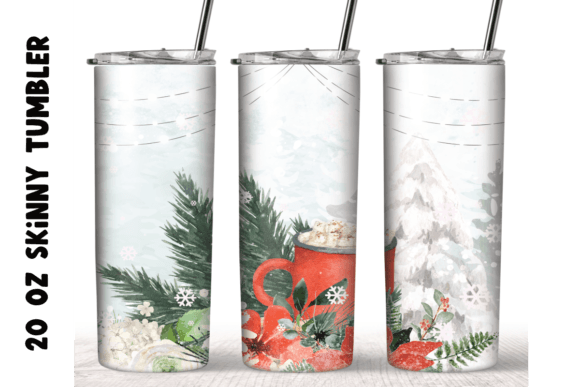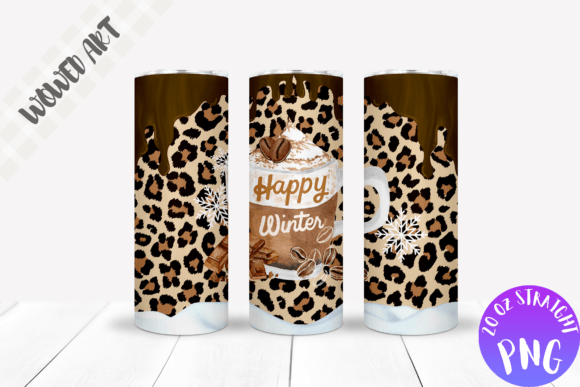
Happy Winter 20 Oz Skinny Tumbler Wrap
As a designer who’s stitched hundreds of holiday-themed embroidery files for boutique clients, Etsy sellers, and craft fair vendors, I opened the Happy Winter 20 Oz Skinny Tumbler Wrap with one question in mind: “Does this translate cleanly from screen to stitch — and more importantly, does it hold up as a finished product people will proudly gift or sell?”
First impression? It’s cheerful without being cloying — think soft snowflakes, gentle swirls, and clean winter typography that leans cozy rather than cartoonish. The layout is tall and narrow (9.3×8.2″), built for vertical flow on a tumbler, but that shape also makes it unexpectedly versatile for other projects. I immediately pictured it scaled down for an embroidered tea towel, centered on a baby sweatshirt, or rotated sideways as a subtle border on a linen apron.
I tested it on three real-world items: a cotton twill tote bag for a local café’s holiday pop-up, a fleece-lined toddler hoodie for a custom gift order, and a set of matching kitchen towels for a small-batch Etsy listing. On the tote, the design held crispness in the fill stitches — no bleeding or distortion — especially when paired with medium-weight cutaway stabilizer. On the hoodie, the satin-stitch elements (like the curved “Winter” lettering) stayed smooth and legible, even over the slight nap of the fleece backing. And on the towels? It read beautifully at 6.5″ wide — proof that the original proportions scale thoughtfully, not just technically.
This isn’t a one-trick tumbler wrap. As a machine embroidery design, its strength lies in intentional simplicity: minimal fine detail, balanced negative space, and generous stroke weights. That means fewer thread breaks, less re-hooping, and cleaner results on textured fabrics like terry cloth, canvas, or even lightweight denim. It’s also forgiving on stretchy fabric — I ran it on a ribbed knit baby onesie using tear-away + topping, and the letterforms stayed sharp without puckering.
That said, there are places where caution matters. The Happy Winter 20 Oz Skinny Tumbler Wrap wasn’t built for tiny hoops. If you’re stitching on a curved surface like a cap visor or a petite beanie, you’ll need to resize carefully — and test first. The original height pushes most standard 4×4 hoops, so for caps or infant hats, aim for 3.75″ max height and verify clarity in the smallest flourishes. Also, avoid dense black-on-black combos on dark fabric unless you’re using high-contrast thread (like white or silver metallic) — the design relies on tonal separation, not heavy density, to communicate depth.
For applique design workflows, it adapts well. The outer outline is clean and continuous, making it easy to digitize a simple reverse applique or layer under a contrasting fabric patch. I used it as a base for a wool-felt snowflake applique on a linen pillow cover — the embroidery anchored the shape while letting the texture shine.
Where it shines brightest is in perceived value. Customers notice when a personalized gift feels intentional, not slapped on. This design reads as handmade *and* professional — no pixelation, no awkward spacing, no overcrowded motifs. That builds trust. When I listed mugs with this motif heat-pressed (using the PNG for mockups), buyers commented on how “cohesive” the branding felt across my shop — even though the file itself was standalone. That’s the quiet power of a well-proportioned, seasonally grounded digital embroidery file.
For Etsy sellers and small shop products, the licensing note matters: confirm whether commercial use is permitted before bundling it into kits or selling finished embroidered items. Since the listing specifies PNG files only (not SVG), it’s clearly meant for digitizing or print-based mockups — not direct cutting. That’s fine, but it means you’ll need to partner with a digitizer if you want ready-to-stitch embroidery files, or budget time to vector-trace and stabilize the outlines yourself.
A few practical notes I jotted while testing:
- Always test on scrap fabric first — especially with fleece, terry, or blends. Stitch density can shift dramatically depending on fiber content.
- Check thread color contrast early — this design works best with 2–3 complementary threads (e.g., icy blue + charcoal gray + off-white), not six competing hues.
- Review stitch density in your embroidery software — PNGs don’t carry stitch data, so your digitizer must balance coverage and breathability, particularly in the snowflake clusters.
- Confirm hoop size compatibility — if your machine maxes out at 5×7″, the full 9.3×8.2″ layout won’t fit without scaling. Know your limits before promising turnaround times.
- Inspect small details at 200% zoom — the swirls near the base of the “W” in “Winter” are delicate; they’ll clean up beautifully on stable fabric but may blur on thin cotton voile without proper topping.
- Test in black-and-white mockups — this design relies on shape and rhythm more than color, so it holds up strongly in monochrome listings or minimalist branding.
- Compare light vs. dark fabric backgrounds — it reads warmer on cream linen, crisper on navy denim. Let your product context guide thread choice.
- Use appropriate stabilizer — cutaway for knits, tear-away for stable wovens, and water-soluble topping for textured surfaces like terry or bouclé.
The Happy Winter 20 Oz Skinny Tumbler Wrap doesn’t scream “holiday.” It whispers “thoughtful,” “seasonal,” and “ready for real life.” That’s rare in the Crafts category — where so many Graphics lean overly literal or trend-chasing. It fits naturally into a craft business that values consistency over clutter: a single design that works across apparel, home goods, and gifts without needing five variations.
If you’re building a cohesive winter collection — say, matching embroidered sweatshirts, tea towels, and baby blankets — this is the kind of anchor design that ties everything together visually without demanding attention. It supports your brand instead of overshadowing it. And for customers? It feels like care, not commerce.
Bottom line: The Happy Winter 20 Oz Skinny Tumbler Wrap earns its place in my working library not because it’s flashy, but because it’s reliable — a quiet, well-shaped piece of design assets that stitches true, sells well, and keeps looking fresh long after New Year’s Eve.