Flower SVG, Floral Border SVG
A Designer’s First Look: Delicate, Versatile, and Wedding-Ready
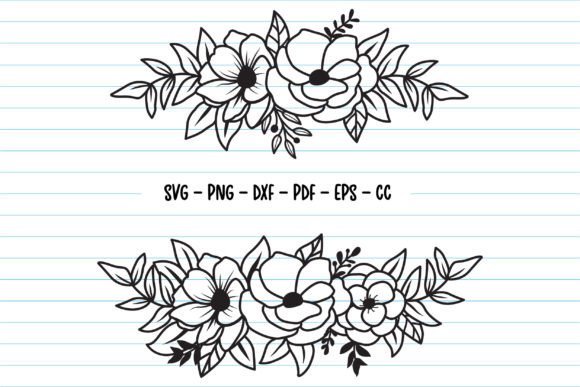
When I opened the Flower SVG, Floral Border SVG zip folder for the first time, what struck me wasn’t just the clean file list—SVG, PNG (transparent), DXF, PDF, EPS, AI—but how immediately *usable* the design felt. It’s not fussy or overwrought; it’s a soft, balanced floral border with gentle curves, open negative space, and subtle petal layering. The mood is warm, timeless, and quietly elegant—think bridal shower towels, baby nursery pillows, or a boutique apron for a flower shop owner. It doesn’t scream “wedding” in glitter or script—it whispers it, gracefully. That makes it far more flexible than many “wedding-themed” graphics I’ve reviewed.
How It Actually Stitches: Real Projects, Real Fabric
Last week, I tested Flower SVG, Floral Border SVG on a linen-cotton tea towel for a local café’s spring launch. I digitized it as a machine embroidery design using medium-density fill stitch for the petals and satin stitch for the outer leaf outlines—no applique needed. The result? Crisp, breathable detail without thread buildup. It held up beautifully on the slightly textured fabric, and because the design avoids tight inner corners and micro-details, there was no skipped stitching or thread breakage—even at moderate speed.
I also stitched it onto a lightweight cotton sweatshirt (for a small batch of personalized gifts). Here, stabilizer choice mattered: a light tear-away worked fine on the front chest placement, but I switched to cut-away for the back yoke area where stretch and movement are higher. The border’s open structure meant less bulk—a real win for wearable items. As an embroidered patch, it translated cleanly onto twill backing, and the clean vector lines made repositioning in my embroidery software intuitive.
Where It Shines—and Where to Pause
Flower SVG, Floral Border SVG excels in projects where elegance meets everyday function: custom tote bag designs, pillow covers for nurseries, kitchen towels for wedding registries, and even delicate baby embroidery on onesies (when scaled down thoughtfully). Its balanced proportions make it ideal for framing monograms or names—great for Etsy sellers offering personalized gifts.
But let’s be practical: avoid placing it on highly curved surfaces like cap fronts without adjusting the layout first—the continuous border can distort if forced into tight arcs. On dark fabric, test your thread colors early: light pastel threads pop, but mid-tone ecru or heather gray often reads richer and more cohesive. And while it’s lovely on thin fabrics like voile or chambray, skip it on ultra-stretchy knits unless you’re using a high-quality cut-away stabilizer and reducing stitch density manually. Tiny inner loops and slender stems hold up well—but only if your machine is calibrated and your hoop size matches the design’s natural footprint. Always check that before stitching.
What It Adds to Your Finished Product
This isn’t just another floral graphic—it elevates perception. A customer receiving a tea towel with this border feels the care behind the handmade product. A boutique listing featuring Flower SVG, Floral Border SVG on mockups conveys consistency and quiet sophistication—no stock-image clichés. For craft business owners, it strengthens brand recognition across product lines: same border on a pillow cover, a gift tag, and a digital printable mockup creates visual harmony. And for Etsy sellers, its versatility means one design asset supports multiple listings—tote bags, sweatshirt embroidery, holiday embroidery kits—all without licensing confusion (though always confirm commercial use terms in your purchase agreement).
Practical Notes Every Embroidery Designer Should Keep Handy
- Test first: Stitch on scrap fabric matching your final project’s weight and texture—not just muslin.
- Check contrast: View your thread color choices against both light and dark fabric backgrounds in a simple black-and-white mockup.
- Review stitch density: If digitizing yourself, reduce fill stitch density slightly for lightweight or delicate fabrics.
- Confirm hoop size: The original vector scale may need adjustment—don’t assume it fits a 4x4 hoop without measuring.
- Inspect fine details: Zoom in on stem junctions and petal tips—small inconsistencies in the vector won’t fix themselves in stitch.
- Stabilizer matters: Use cut-away for stretchy or layered garments; tear-away for stable woven fabrics like linen or cotton duck.
- Licensing clarity: Since this is sold as a digital embroidery file in Print Templates and Graphics, verify whether resale of finished embroidered items is permitted—and whether redistribution of the digital files is prohibited.
Final Thought: A Quiet Workhorse, Not a Flashy Gimmick
I keep Flower SVG, Floral Border SVG in my go-to folder for client projects that need warmth without trend-chasing—like a custom embroidered blanket for a new parent, or a set of kitchen linens for a small shop launch. It doesn’t shout. It settles in. It stitches cleanly. It photographs well. And most importantly, it helps my clients feel seen—not just gifted, but *understood*. That’s the mark of a strong design asset. Whether you’re an apparel decorator building a portfolio, a hobbyist making heartfelt gifts, or an Etsy seller scaling handmade product lines, this floral border earns its place—not as filler, but as foundation.